Spring has a way of making things easier to see.
The light changes. The house feels different. Small details stand out more clearly. A narrow hallway feels more cluttered than it used to. The stairs seem a little less steady. The unopened mail on the counter has started to pile up. A parent who insists everything is fine may still leave you with the feeling that something has changed.
For many families, spring becomes the moment when a quiet concern is harder to ignore.
Usually, it is not one dramatic event. It is a series of smaller things. A near fall. Less food in the fridge. Laundry that is no longer being kept up. Medications that seem less organized. A parent who looks more tired, less steady, or simply less like themselves at home.
If you have been wondering whether your mother or father may need more support, you are not overreacting. Spring is a practical time to reassess safety at home, notice early changes, and make thoughtful decisions before a crisis forces the issue.
Why Spring Is a Good Time to Reassess Safety at Home
Winter often hides more than families realize.
People go out less. Routines get smaller. Balance may decline. Fatigue can build. Household tasks that once felt manageable can quietly become harder. What starts as a bit of clutter or a missed errand can gradually become a pattern.
Spring gives families a natural opportunity to pause and take a fresh look.
As you open windows, tidy rooms, and move through the home with clearer eyes, it becomes easier to ask honest questions:
- Is the home still safe for my parent as things are now?
- Have everyday routines become harder than they used to be?
- Are there early signs my parent needs more help at home?
- Are we relying on hope instead of a plan?
A spring home safety checklist for seniors is not about taking independence away. It is about protecting it. The earlier families notice changes, the more options they usually have.
Signs an Aging Parent May Need More Help at Home
Many families wait for a major event before they act. In reality, the earlier signs are often quieter.
The Home Feels Less Safe
You may notice loose rugs, cluttered walkways, dim lighting, or stairs that suddenly seem more difficult. Sometimes the concern is not a fall that already happened. It is the way your parent now moves through the home more cautiously or with less confidence.
Meals Are Becoming Inconsistent
A parent who once cooked regularly may now skip meals, rely on snacks, or avoid meal preparation because it feels tiring or overwhelming. Weight loss, low energy, or an empty fridge can all be warning signs.
Medication Is Less Organized
Missed doses, duplicate doses, misplaced pill bottles, or uncertainty about what was taken can suggest that daily routines are becoming harder to manage safely.
Personal Care or Housekeeping Is Slipping
Sometimes families notice laundry piling up, a change in grooming, an untidy bathroom, or household chores no longer being done the way they once were. These changes may reflect fatigue, pain, mobility issues, memory concerns, or simple overwhelm.
Mobility Has Changed
Your parent may use furniture for support, hesitate before stairs, or take longer getting in and out of a chair. Even subtle changes in mobility can increase the risk of falls and make daily life more tiring.
Isolation Is Increasing
Home safety is not only about physical risks. When someone is alone more often, routines can weaken. Appetite, motivation, movement, and mood can all be affected.
You Leave Feeling Uneasy
This matters. Many adult children sense that something is shifting before they can clearly explain why. If you repeatedly leave your parent’s home with a knot in your stomach, it is worth paying attention to that feeling.
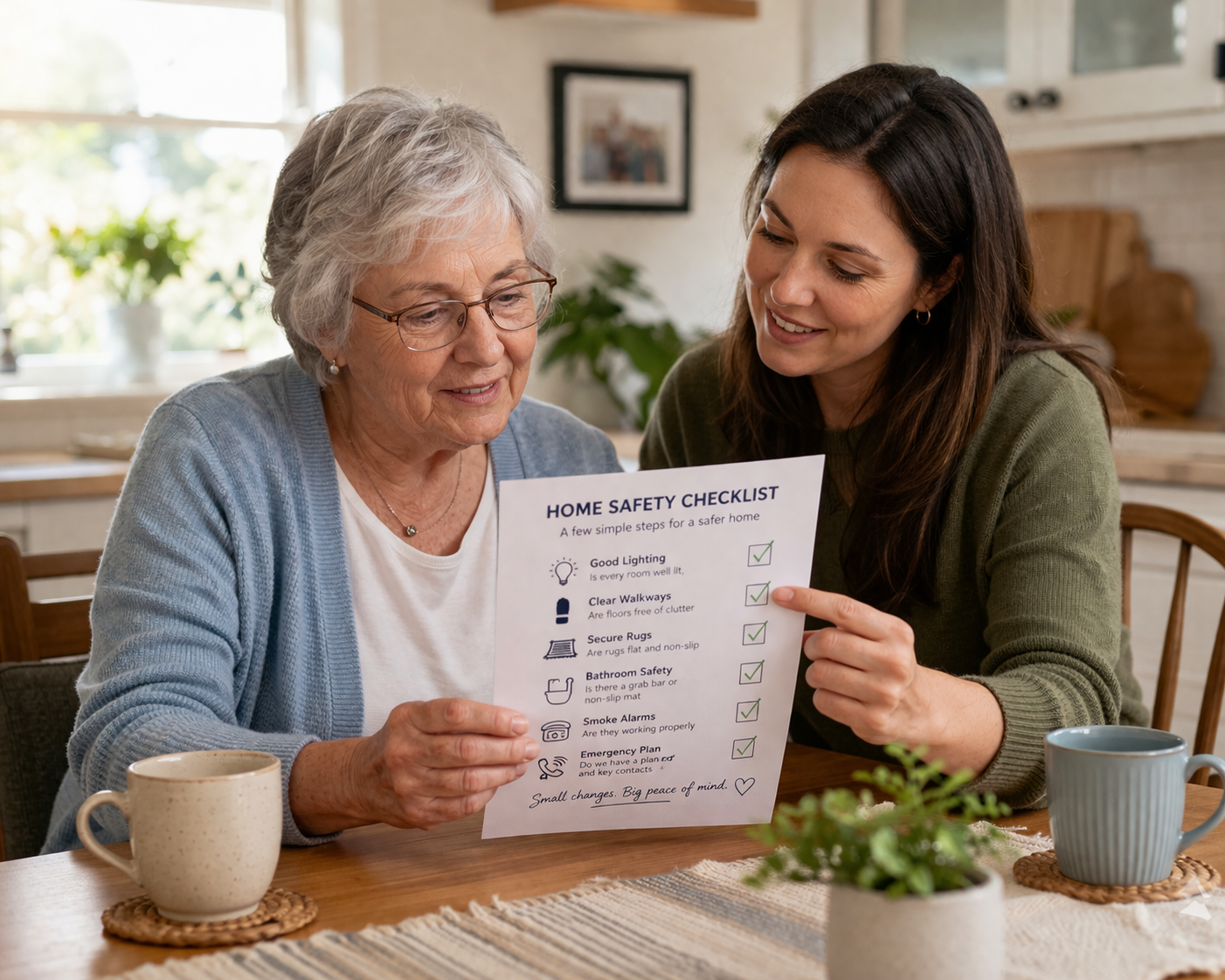
A Practical Spring Home Safety Checklist for Seniors
You do not need to turn this into a formal inspection. A calm walkthrough of the home can tell you a great deal.
Entryways and Hallways
- →Are walkways clear and easy to move through?
- →Are shoes, cords, bags, or small tables creating tripping hazards?
- →Is there enough lighting near entrances and along nighttime walking paths?
- →Are handrails secure?
Living Room
- →Are rugs stable, or do they slide?
- →Is furniture spaced in a way that makes movement easy?
- →Is there a sturdy chair with arms for easier sitting and standing?
- →Are important items within easy reach?
Kitchen
- →Is food fresh and easy to access?
- →Are expired items piling up?
- →Is the stove, kettle, or microwave still being used safely?
- →Can your parent prepare simple meals without exhaustion or confusion?
Bathroom
- →Is getting in and out of the shower or tub becoming harder?
- →Would grab bars or non-slip supports help?
- →Is the bathroom easy to reach at night?
- →Are toiletries and towels within easy reach?
Bedroom
- →Is the path from bed to bathroom clear?
- →Is there a lamp within easy reach?
- →Is getting in and out of bed more difficult than before?
- →Are glasses, water, medications, and a phone close by if needed?
Daily Routine and Organization
- →Is laundry being done regularly?
- →Are appointments being missed?
- →Is mail piling up?
- →Are medications and calendars still being managed properly?
- →Is your parent keeping up with meals, bathing, and other daily routines?
This kind of senior home safety checklist helps families understand whether a few changes in the home may be enough, or whether more support is needed.
When Small Changes May Be Enough
Sometimes a few simple adjustments can make a meaningful difference.
Better lighting. Fewer tripping hazards. A more supportive bathroom setup. Easier meal routines. More regular family check-ins. In some cases, these small changes improve confidence and reduce immediate risk.
But sometimes the issue is not only the house itself. It is that daily life has become harder for your parent to manage alone.
That is often the point when families begin asking whether home care should be part of the conversation.
When to Consider Home Care
Aging parent safety at home is not just about equipment or layout. It is also about whether daily routines are still manageable and whether your parent has enough support to live safely and comfortably.
Home care may help when:
- meals and hydration are becoming inconsistent
- medication routines are slipping
- mobility changes are increasing fall risk
- personal care is becoming harder
- isolation is affecting overall wellbeing
- family caregiving is becoming stressful or unsustainable
For some families, companion care is the right place to start. For others, personal support and daily living assistance may be the better fit. What matters most is choosing the level of help that matches what is actually happening at home.
How to Start the Conversation Without Escalating Fear
This is often the hardest part.
Most older adults do not respond well to a conversation that feels like a judgment or an ambush. A calmer, more respectful approach usually works better.
You might say:
The goal is not to win an argument. The goal is to open a conversation.
Families often find that practical, respectful support feels easier to accept than help that sounds drastic. Sometimes one consistent person in the home a few times a week can make daily life feel much more manageable.
When to Book a home care assessment
You do not need to wait for a fall, an emergency room visit, or a major crisis before asking for guidance through a home care assessment.
It may be time to book a home care assessment if:
- the home no longer feels consistently safe
- your parent is struggling with meals, mobility, or medication
- there are signs of memory changes or confusion
- family caregiving is becoming difficult to sustain
- you know something has changed, but you are not sure what kind of help is needed
Many families are not deciding between complete independence and full-time care. They are trying to understand what kind of support would make life safer, calmer, and more manageable right now.
A Thoughtful Next Step for Families
If you have started noticing small changes at home, you do not need to figure everything out at once.
Start with what you can see. Walk through the home. Notice what feels different. Pay attention to routines that are becoming harder. Then take the next step before the situation becomes urgent.
Arcadia Home Care supports families in Toronto and the GTA with thoughtful, personalized care at home. Whether your family needs companion care, personal support, or guidance on what comes next, the first step is often simply a conversation.
Book a Free Consultation